/
Reduce energy bills
Reduce your energy bills using solar
"Two lines are crossing in the right direction."
Two energy trends are moving in your favour - grid electricity costs are up, but solar costs are down. The gap between what you pay the grid and what it costs to generate your own power is now wide enough to make commercial solar a consistently strong investment for many businesses.
Whether solar works for your site depends on your load profile, your roof, and what you're trying to achieve. We’ve put together the information below to help you assess if solar and battery is the right fit for your business.
/ The Reality
Power prices aren't going down. It's time your roof did something about it.
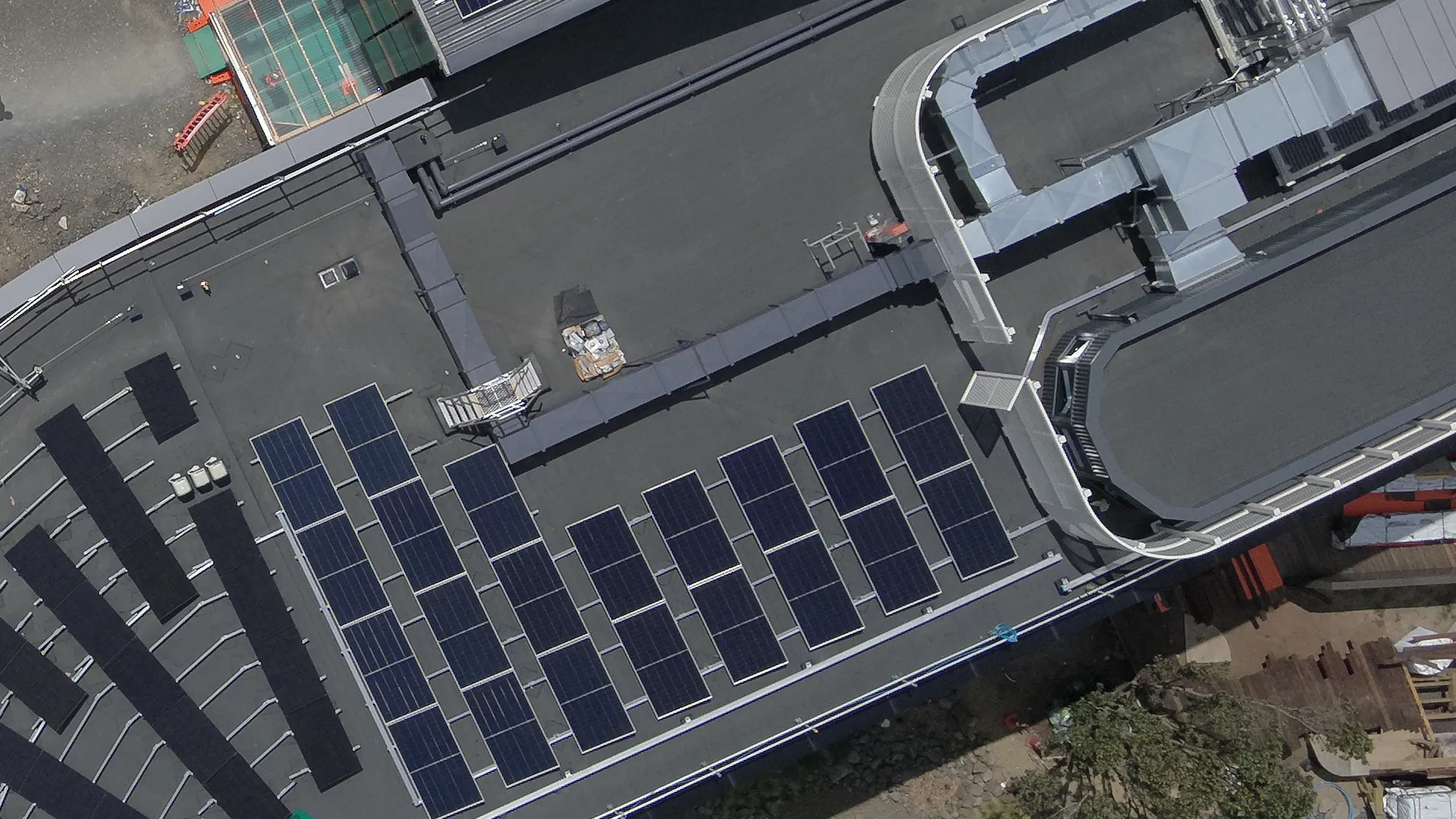
New Zealand commercial electricity costs have risen steadily for two decades, and sharply since 2021. Meanwhile, most commercial buildings have thousands of square metres of unused roof space. Behind-the-meter solar turns that dead space into a direct offset -energy you generate and use before the grid gets involved. The sites that get the best return share a few traits: predictable daytime demand and a roof that's structurally sound. Examples that are a good fit include distribution centres running logistics through business hours, as are supermarkets with daytime refrigeration load, processing plants on regular shifts, and office campuses with steady data and climate demand.
A well-designed commercial solar system could shave up to 50% off your power bills.

/ Is this right for you?
Solar works. But does it work for your building?
The economics are real, but not every project is the same. The difference between a great investment and a mediocre one comes down to a few specific factors. Before we recommend anything, we'll check three things: your energy profile, your building structure, and the system size that gives you the best return. If any of those don't stack up for your site, we'll say so.
What's your energy profile?
The best returns come from matching the system size to your actual consumption and energy tariffs. A building that uses most power during daylight hours captures more value from every solar panel. Roof size matters less than load shape. A site with most of its demand in the evenings or at weekends is rarely a good fit for solar.
Can your building support it?
The building structure needs a load-capacity check before anything else is designed. For new builds, the system should be specified alongside the roofing itself, not bolted on later. A fixing system that is not compatible with the roof can void warranties and creates opportunities for leaks. For existing buildings, the roof shouldn't be due for replacement in the next 15 to 20 years. If it is, we'll recommend waiting for the re-roof and doing them together.
What's the right size, not the biggest size?
An oversized system might reduce your bill by 60%, but a well-sized system at 35% often delivers a better return over its life. Beyond the optimal point, extra panels add cost without proportional benefit. We size for return on investment, not maximum coverage - we model the business case first and recommend the system that pays back fastest for your site.
/ Results
Real projects. Real outcomes.
We help businesses and community groups realise their renewable energy goals. Take a look at our projects to find out how.


/ How We Help
From first conversation to long-term performance.
Every project is different. New builds integrate solar into the design from day one. Existing buildings need structural assessment and a retrofit plan that respects the existing roof. In either situation, you'll have one partner from the first conversation through to year ten of operations.
We assess your opportunity
A Revolve engineer reviews your energy use, building structure, roof condition, and financial objectives. You get a clear picture of what's possible, what it costs, and whether it makes financial and technical sense for your site. Sometimes the honest answer is "not yet", and we'll tell you that.
We design for your building, your returns
The system is engineered around your actual consumption, structural requirements, and budget, not a generic default. We protect the building fabric, maintain roof warranties, and design for 25+ years of performance - not just day-one output.
We manage procurement and quality
Revolve specifies the equipment, assists with the tender process, and oversees quality through construction and commissioning. Because we don't install systems ourselves, we can hold the installer to account on your behalf. You'll have one point of contact.
We monitor and optimise
Solar isn't set and forget. We complete performance monitoring in real time, schedule maintenance before things fail, and optimise the system on an ongoing basis. We track degradation, detect faults early, and make sure the system delivers what was promised in year one and year ten.
/ FAQ
Questions about commercial solar?
How much does a commercial solar system cost?
It depends on your roof, your energy usage, and the system size. Revolve provides a detailed proposal after a site assessment, no generic quotes. Finance options are available so you can start saving without upfront capital.
How long until I see a return?
Bill reductions start from your first full billing cycle. Payback periods vary depending on system size, your tariff structure, and how well the system matches your load profile.
Will solar work on my building?
Most commercial roofs are suitable. Revolve's site assessment covers roof condition, orientation, shading, structural capacity, and electrical infrastructure. If it won't work, we'll tell you upfront.
What happens on cloudy days or at night?
Solar generates less on overcast days but still produces. At night, you draw from the grid as usual. The economics are built around your actual consumption profile, not ideal conditions.
Do I need to maintain the system?
We recommend every system has a maintenance contract in place. Revolve offers asset management services to manage O&M contracts, as well as track and report on the financial, energy, and carbon performance of your system. With this data we can identify issues early and ensure they're resolved to keep the system meeting its long-term objectives.