/ The Result
205 kWp PV + 105 kWh BESS - Living Building Challenge
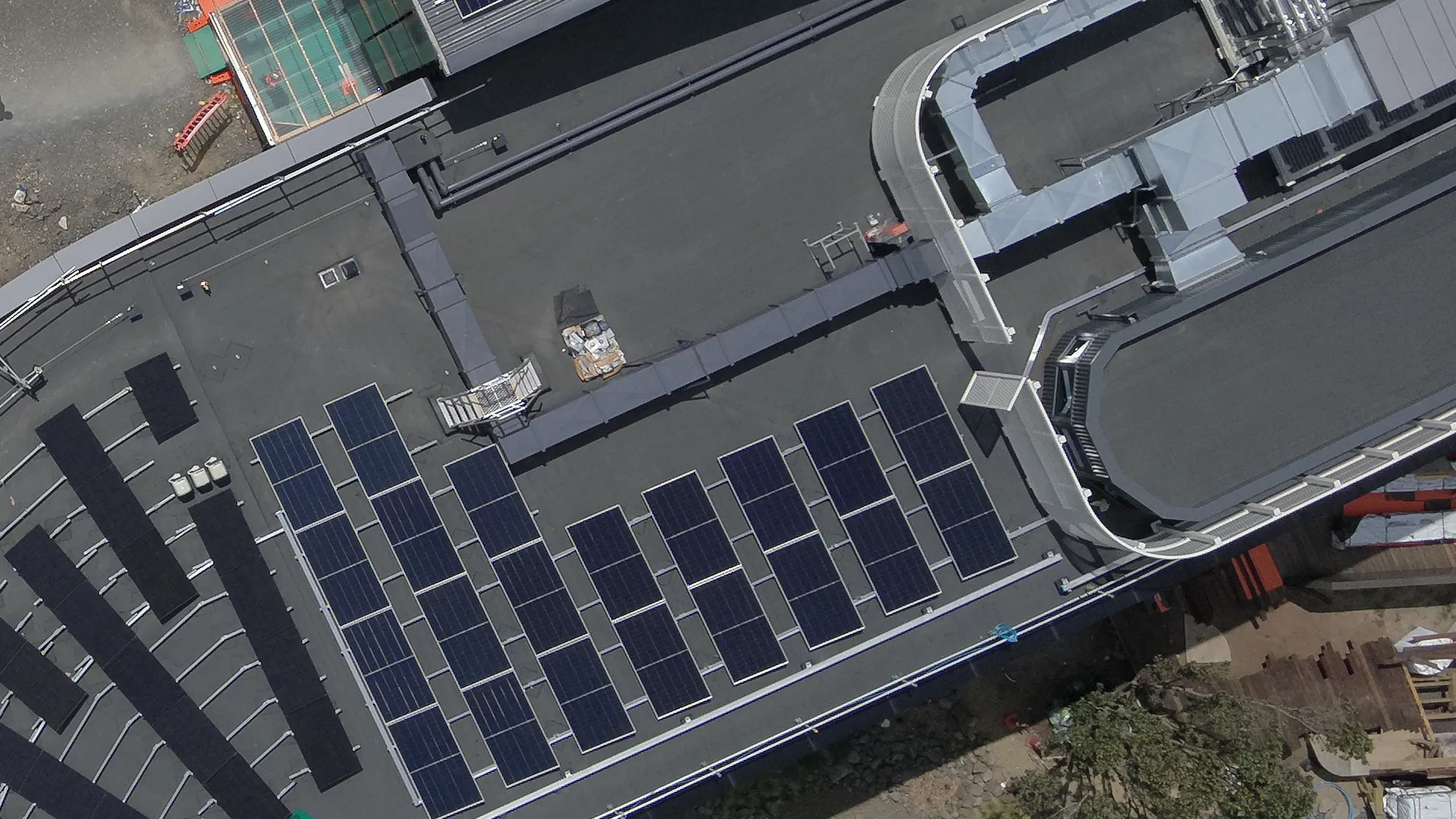
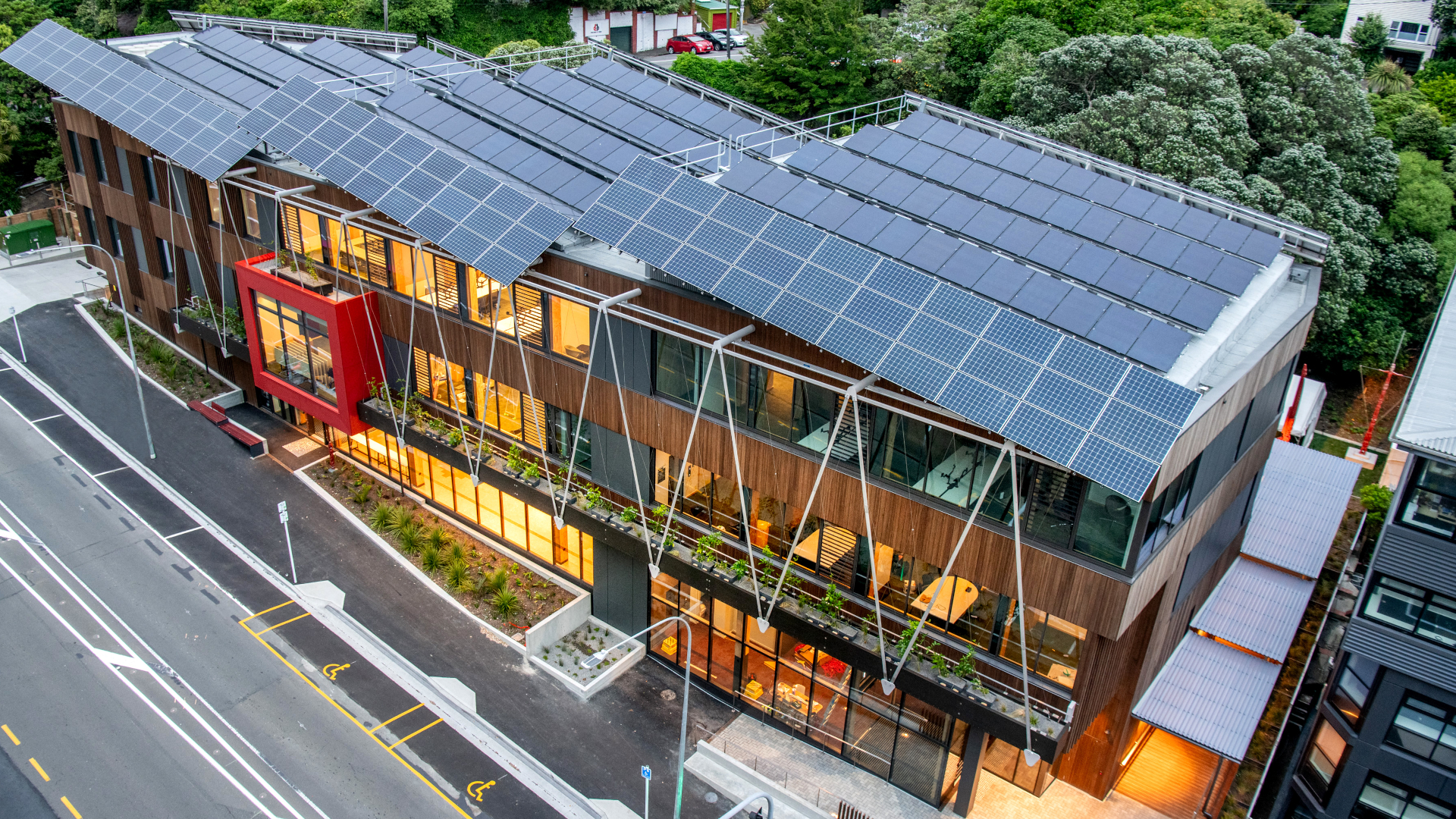
Ngā Mokopuna was designed to meet the strict requirements of the Living Building Challenge. The building was designed to avoid harmful chemicals, operate independently for water supply and wastewater management, generate 105% of its annual energy use, and provide up to seven days of backup power.
> 105%
Energy self-generated
205 kWp
REC + Sunpower solar panels
105 kWh
BYD Battery Box storage
/ Challenge
Achieving living building status required creative design and clever engineering.
Victoria University of Wellington (Te Herenga Waka) zero greenhouse gas emissions by 2030, alongside a goal to cut gross greenhouse emissions by 40% from a 2017 baseline. The university aspires to champion a sustainable future through leadership, research, and a low-impact campus.
Victoria University wanted to create a marae-based university facility that aspires to Living Building™ certification and acts as a practical “building-as-teacher” for kaitiakitanga. To do so, they needed to design a building that is self-sufficient on its site: able to generate its own electricity, collect all required water, and manage its own wastewater, while also giving back beyond its boundaries to benefit the local ecology andcommunity.
The Living Building Challenge (LBC) is arguably the most demanding modern building certification in the world today. To meet the Energy PETAL requirements, the building must generate 105% of its consumption on site, and provide seven days of back-up power for critical loads..

/ Our approach
Complex design, modelling and implementation of PV + BESS
Located in the heart of Wellington, Ngā Mokopuna presented unique challenges. Each stage of design and construction needed to meet the demanding requirements of the Living Building Challenge.
/01
Yield assessment
Revolve completed rigorous yield modelling of system performance to verify that the system could generate the energy required to meet the Living Building Challenge Energy Petal requirements. Our detailed 3D model assessed the impact of shading from neighbouring buildings, and the geometry of the array.
/ 02
Detailed esign
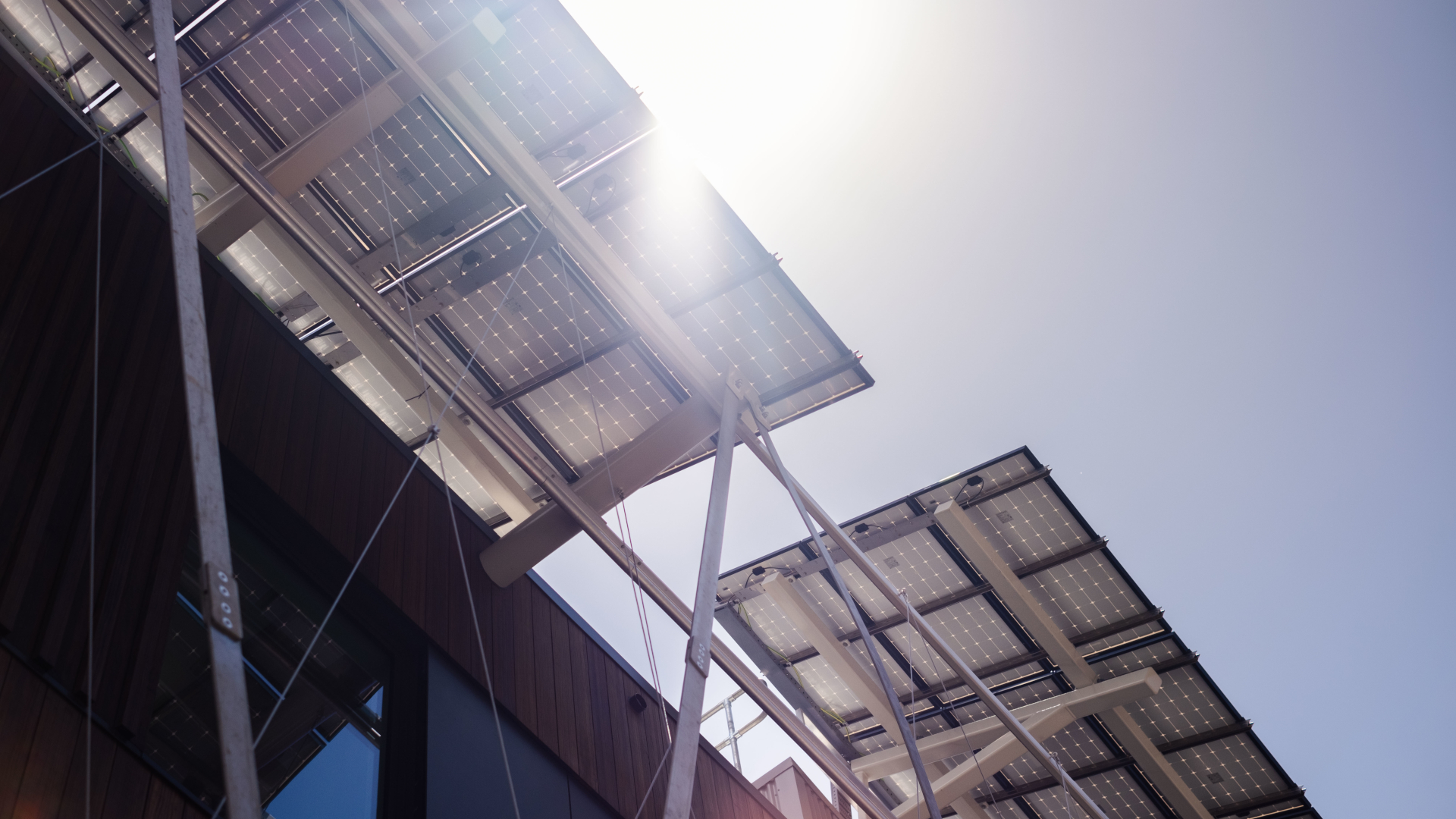
Revolve coordinated the novel array frame design with structural engineers and installation contractors. Energy generation was maximised by making full use of the available roof area while balancing the module mounting requirements of the solar system. Revolve ensured the building's architectural design was maintained, while engineering the system to withstand Wellington's extreme wind conditions.
The battery energy storage system that works with solar generation to provide extensive backup during power outages. The system is designed to the latest industry standards, and includes additional battery gas detectors for safety.
/ 03
Materials compliance
We ensured the system met the materials Petal of the Living Building Challenge by vetting each system component against the Red List of chemicals to avoid.
/ 04
Construction monitoring
Revolve reviewed the installation work to ensure that it meets the design requirements and industry best practice.

/ Results
Real projects. Real outcomes.
We help businesses and community groups realise their renewable energy goals. Take a look at our projects to find out how.