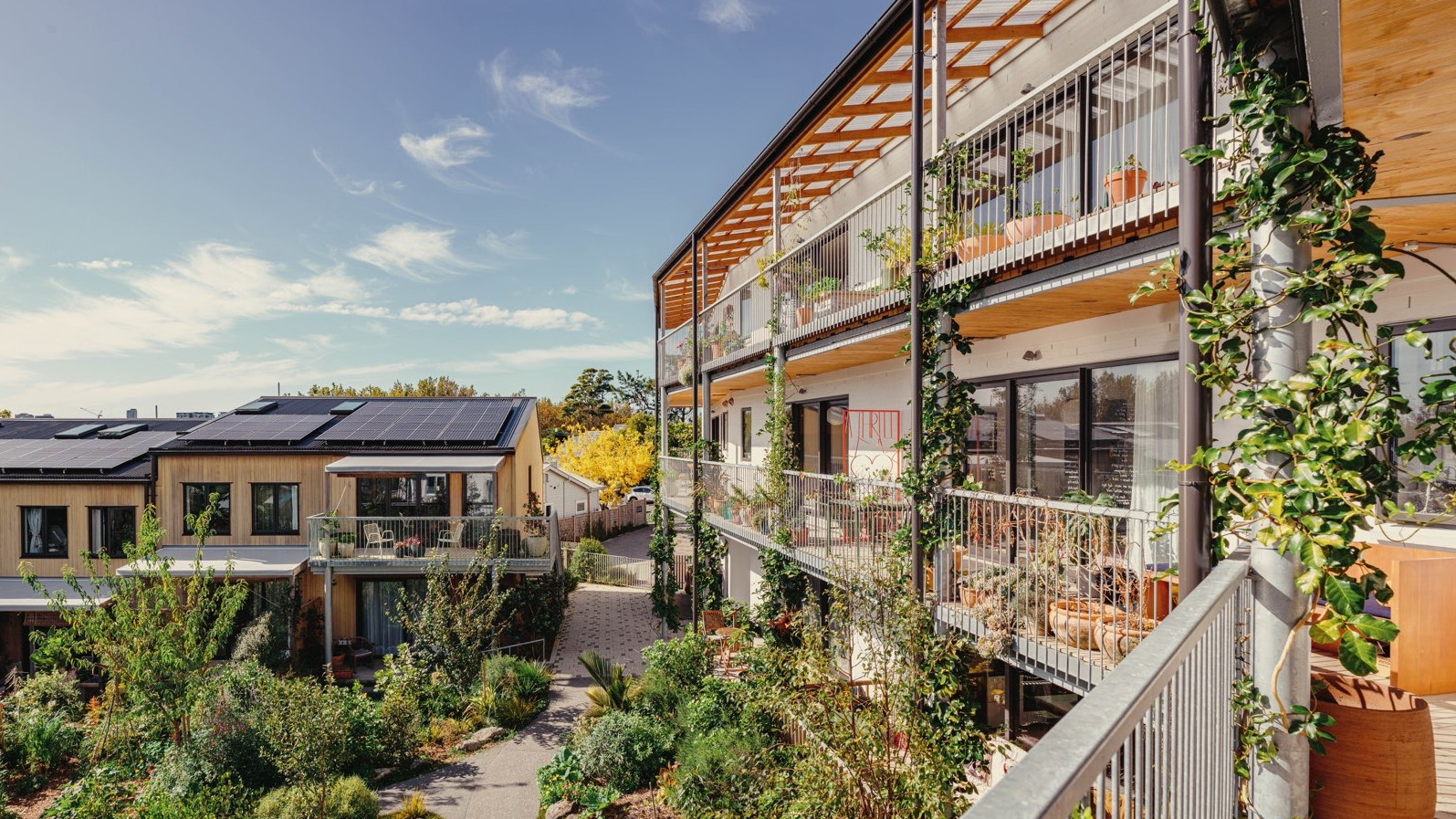
Cohaus is a 20 apartment complex in Grey Lynn, Auckland, completed in 2021. Residents enjoy very low-cost utilities, achieved through a centralised community owned energy system embedded in the development's fabric.


/ The Result
60% smaller grid connection. >60% lower utility bills.
Cohaus reduced its required grid connection by ~60% by building shared energy infrastructure into the fabric of the development. A 38 kWp solar PV array supplies ~68% of annual energy needs on a net basis, while dynamic load control optimises the central heat‑pump hot water system (observed COP ~3.5).
With Revolve's automated metering and billing system, managed by the community, residents benefit from a system that was more efficient to build — and is materially cheaper to operate. Residents utilities bills are 60% less than traditional, apartment‑by‑apartment utilities.
60%
Lower bills than a traditional approach
68%
Of energy use generated by the community.
60%
Reduction in required grid capacity.
/ Challenge
What if your community owned the energy system?
Most apartment developments lock residents into oversized, fragmented utility infrastructure and pricing they can’t influence. Cohaus set out to prove there’s a better model — one that uses community scale to deliver equal or better services at the lowest possible cost.
Cohausing Projects wanted an enduring, self‑running housing community where shared resources are designed into the building — rather than outsourced to traditional utility providers. The project needed a path to deliver the lowest‑cost energy and utilities possible while avoiding over‑spec’d, under‑utilised infrastructure and over‑investment in the grid connection.
The challenge was to right‑size the system and capture economies of scale: retain ownership of internal networks (power and fibre), invest in local generation, and create a model where residents can control costs over the lifetime of the building.

/ Our approach
A partner from idea to operation
Revolve worked collaboratively with the Cohaus design and development team, from the first concept. Revolve's innovative systems continue to allow the community to the community energy scheme efficient.
/ 01
Strategy & feasibility
We tested and modelled various energy sources and approaches, to identify the solution with the lowest lifetime costs. The design and development team had robust information to obtain buy-in from future residents.
/ 02
Design
We provided expert guidance on the integration of the systems into the building design.
/ 03
Procurement and construction
We developed a clear scope and performance specification to enable a competitive tender and selection of quality components at a strong price point. We stayed close through construction to protect quality and intent.
/ 04
Metering, controls & billing
We deployed Revolve’s platform for automated metering and data, demand controls, and resident utility billing. The same system supports billing for shared amenities (e.g. carshare, laundry, refill station) via automated rules.

Scaling the impact.
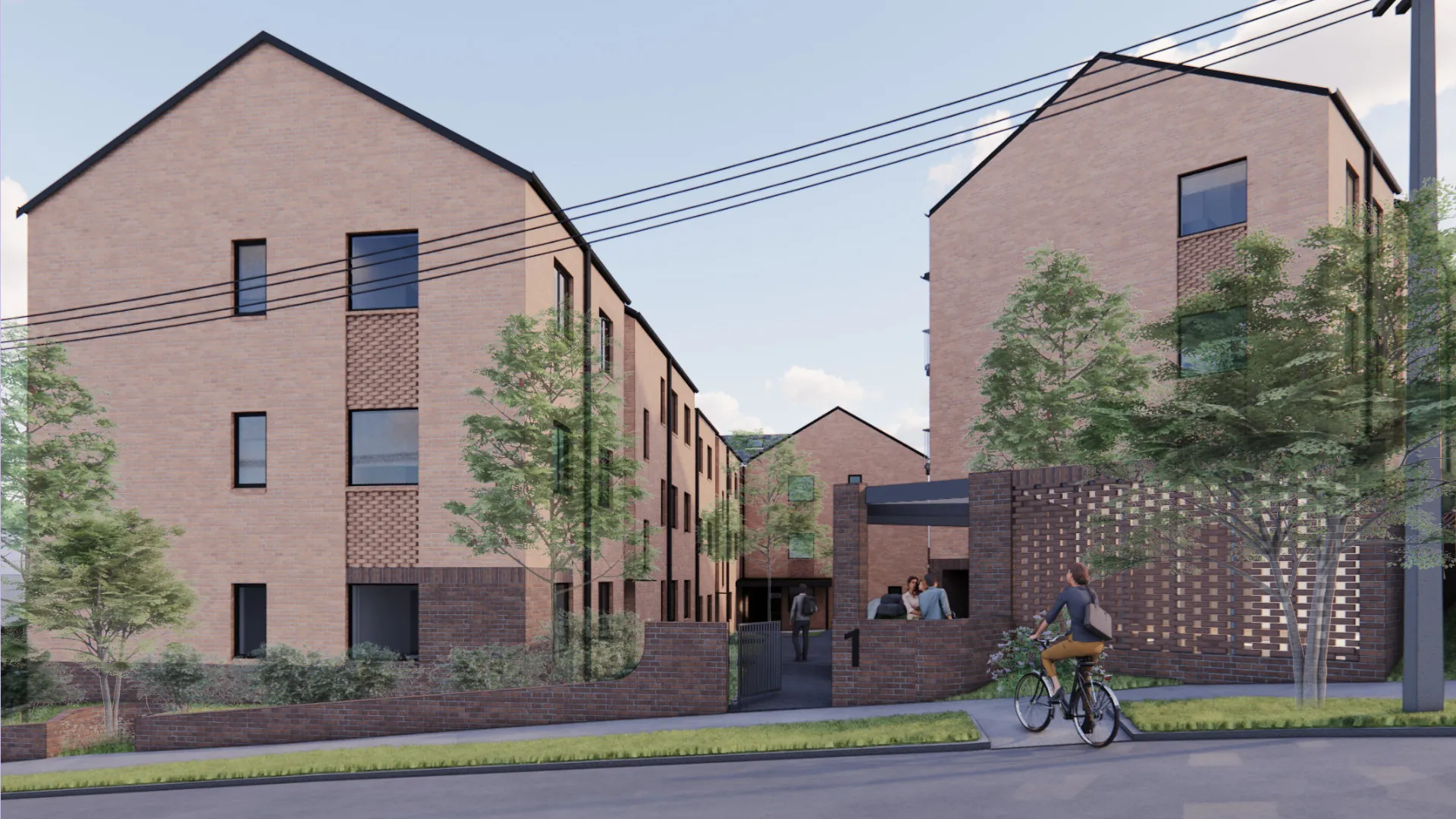
Since 2021, ongoing monitoring of performance and network utilisation has enabled the community to keep optimising an already efficient utilities supply — driving costs down further over time. The model is now being extended to Cohaus’ sibling project, Stanmore Road Apartments (due 2027), targeting an ~87 kWp solar array and a ~100 kW battery to increase self‑sufficiency and lifetime value for residents.
/ Results
Real projects. Real outcomes.
We help businesses and community groups realise their renewable energy goals. Take a look at our projects to find out how.